Raspberry Pi-Based Digital Dash & ECU Tuning Interface for a Race Car
This project transforms a Raspberry Pi into a powerful, multifunctional infotainment and tuning system for my 1989 Foxbody Mustang race car. It replicates the functionality of expensive standalone systems using open-source tools and custom hardware integration, all on a budget.
Overview
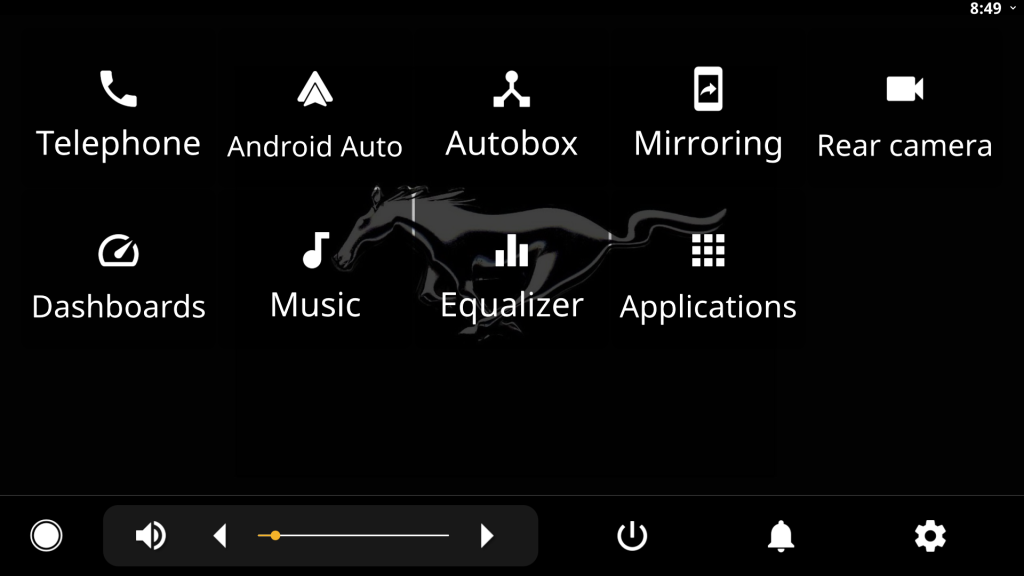
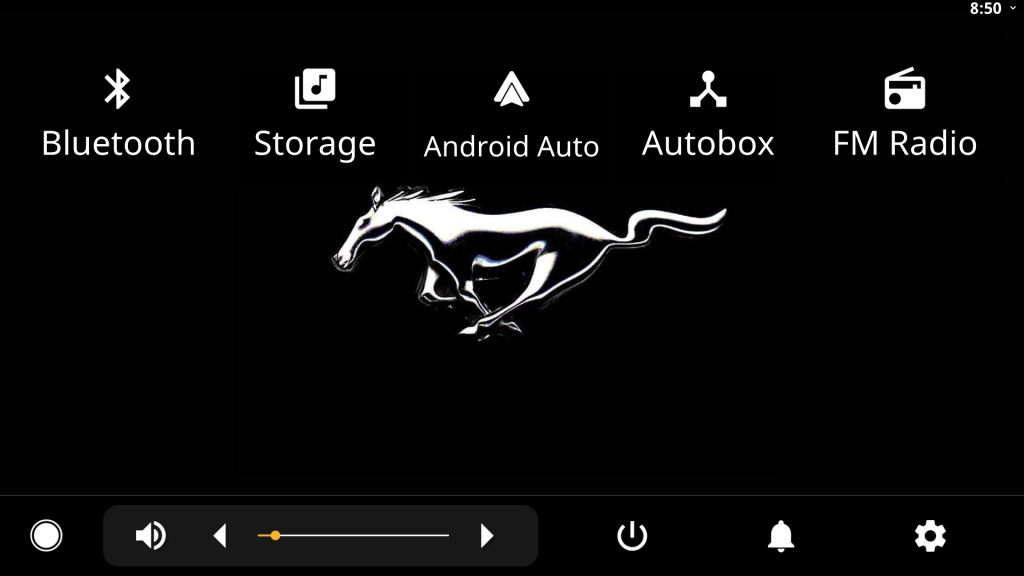
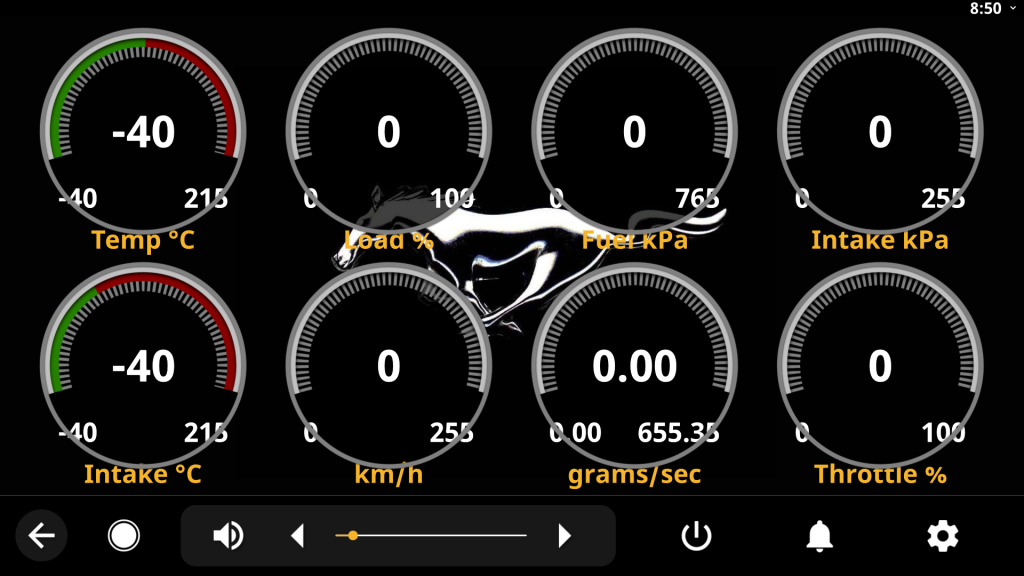
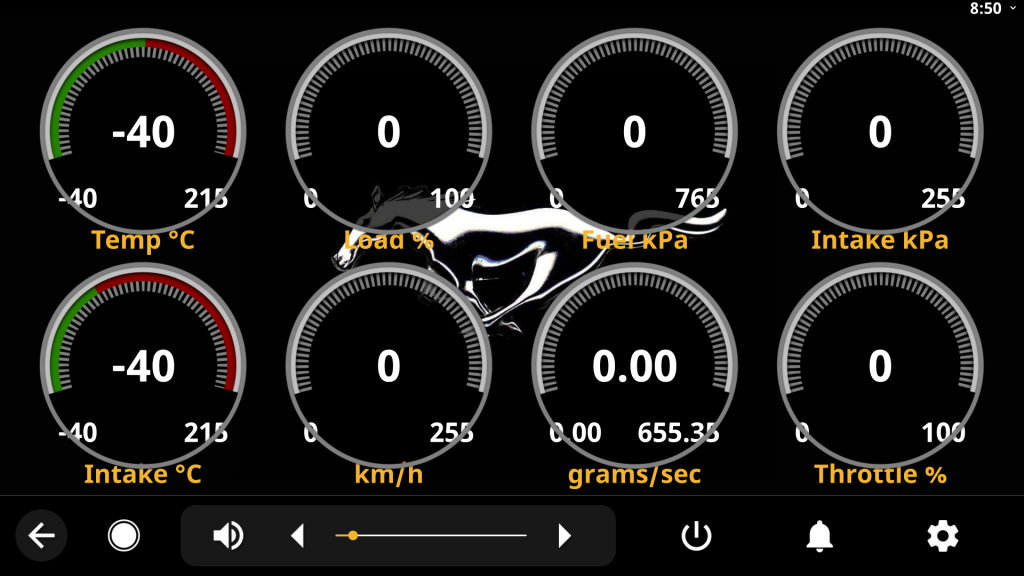
I adapted an open-source Android Auto emulator called OpenAuto to work seamlessly in my custom race car environment. It provides a full graphical interface for music, navigation, and rear camera integration, while also acting as a direct tuning interface with TunerStudio, enabling real-time ECU adjustments without needing a laptop.
Audio is routed through a compact amp module connected to the car’s factory speaker system, offering both clarity and volume control. This setup mimics the experience of high-end race car data systems but at a fraction of the cost.
Key Features
- TunerStudio Integration: The Raspberry Pi connects to my Microsquirt ECU over USB, letting me monitor, log, and tune the engine directly through TunerStudio on the Pi.
- OpenAuto Interface: I customized OpenAuto to act as a driver-friendly infotainment system, with clean visuals and touch support.
- Rear Camera Support: A libcamera-compatible rear camera streams to the dash. A GPIO-controlled trigger (via reverse signal or button) activates the view using
libcamera-vidandffplay. - Graceful Shutdown Logic: A pair of relays (12V and 5V) with a delay module safely shuts down the Pi when ignition is turned off. This replicates OEM-style system behavior and protects the SD card from corruption.
- Audio Integration: A compact 12V-powered audio amplifier module routes the Pi’s sound output through the car’s speaker system.
Bill of Materials (BOM)
| Item | Description | Notes |
|---|---|---|
| Raspberry Pi 4 (2GB or higher) | Main system board | Running OpenAuto & TunerStudio |
| MicroSD Card (32GB+) | Storage for OS and software | High-endurance card preferred |
| 12V to 5V Buck Converter | Powers the Pi | Connected through 5V delay relay |
| 12V Relay | Monitors ignition and triggers shutdown logic | ACC line goes to pin 85 |
| 5V Time Delay Relay Module | Maintains power to Pi for safe shutdown | Receives trigger from Pi GPIO |
| Compact Audio Amplifier | Routes Pi audio to car speakers | Powered by 12V supply |
| Rear Camera (IMX219 or similar) | High-quality CSI camera | Streamed using libcamera-vid |
| Display (HDMI or DSI) | Dash-mounted screen | Non-touch or touch-capable options available |
| USB GPS (optional) | For accurate navigation/tuning logs | Integrates into OpenAuto or TunerStudio logging |
| Misc Wiring, Fuses, Connectors | For all power, GPIO, and AV routing | Include fuse on VREF and Pi power lines |
How It Works
- Startup Sequence: When the ignition (ACC) is turned on, the 12V relay powers up and sends power to the Pi via a 5V converter and delayed relay. The Pi boots into OpenAuto and launches TunerStudio in the background.
- Rear Camera Activation: A GPIO pin is monitored for a high signal. When activated (e.g., reverse gear engaged), a script launches
libcamera-vidto stream live video to the display. - Tuning: TunerStudio runs full-featured on the Pi, letting me log data, tune fuel/spark maps, and test outputs. It connects via USB to the Microsquirt V3 ECU running MS2/Extra firmware.
- Shutdown Sequence: When ignition is turned off, the relay loses its signal. The Pi senses this via GPIO and begins a graceful shutdown after a 5-minute delay. The 5V relay holds power until shutdown is complete.
Power management that follows the ignition
A head unit that stays on after you walk away flattens the battery, and one that loses power abruptly can corrupt its SD card. So a small Python daemon (CarPowerMonitor.py, run as a systemd service) watches the car’s accessory (ACC) line through a GPIO pin and handles the shutdown for me.

The ACC signal arrives on BCM GPIO 23 (active-low through a relay) and a second GPIO (24) drives the power relay. While ACC is on, the relay holds the Pi powered. When ACC drops, the script starts a countdown (60 seconds by default, one constant to change) and checks every second. If the ignition comes back before it expires, the timer is simply cancelled, so a quick stop at a light or a fuel stop doesn’t reboot the head unit. When the countdown runs out, the script cuts the relay line and runs a normal shutdown -h now.
I later replaced this ACC-and-relay approach in my FrogDash digital dash with a UPS-backed design that waits for a clean shutdown before cutting power: FrogDash: A Digital Dash I Built for My Foxbody Mustang.
Why This Matters
High-end ECU dashboards and data logging systems often cost thousands. This project replicates a huge amount of their functionality using a <$150 stack, proving that DIY and open-source solutions can rival commercial-grade gear with the right design and implementation.
It’s also modular — future upgrades could include:
- Bluetooth OBD integration
- CAN display overlay
- Touch UI customizations
- Performance telemetry logging